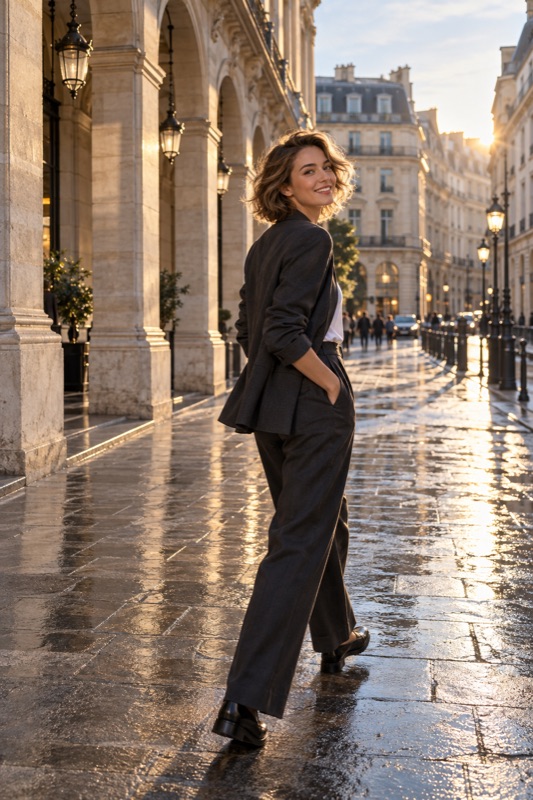
First look for even shade with light still reaching the face. If shade is unavailable, compare a position with the sun behind the subject and check a saved face-led exposure. Avoid making someone stare into bright sunlight; change location, direction or the intended picture instead.
Get it on Google PlayStart with comfort, then the background
A sunny sightseeing day rarely follows a portrait photographer's preferred timetable. You may have a few minutes at a landmark and no chance to return at sunset. Begin by finding a position where the person can open their eyes comfortably and hold a relaxed expression.
Do not keep asking for a better smile while the light makes the person squint. Turn or relocate first. The landmark can still appear from another angle, and a closer portrait may tell the story better than forcing the entire scene into one difficult frame.
Inspect the shade rather than assuming it is even
A building edge or covered entrance may offer a useful starting point. Check the face for isolated bright patches and the background for strong distractions. Tree shade can look comfortable in person while leaving a pattern of bright spots across the eyes and cheeks in the photograph.
Make one test with the person a little closer to the open side of the shade and one farther inside. Compare facial detail and comfort. The better position depends on the surroundings; a universal distance from the shade edge would ignore the actual light.
When there is no shade, change the direction
Nikon's bright-sunlight tip suggests placing the subject between the camera and the sun and prioritizing exposure for the face. Treat this as an experiment on your phone: move around the person, make a test and inspect the result. The background may become much brighter than the face.
If that contrast is too strong, change the background or make a different kind of picture. Do not assume lowering exposure to save every highlight will also preserve the expression. Choose which part of the photograph has to remain readable.
| Midday problem | First move | Review criterion |
|---|---|---|
| Squinting | Turn away from the direct light or find shade | Comfortable open eyes |
| Sun patches on the face | Move to a more evenly shaded position | No unwanted bright stripe across an eye |
| Dark face against a bright view | Reposition and prioritize the face | Expression remains readable |
| Busy landmark behind the head | Move the camera sideways | Subject and background separate clearly |
An illustrative sightseeing stop
Imagine arriving at a sunlit plaza at noon. Your partner wants a full outfit picture with the architecture. The first position puts sunlight directly into their eyes. Walk to a shaded side of the plaza and find an angle that keeps one recognizable architectural feature behind them.
Make a still, full-length test before adding a walking pose. If the building is too bright but the person looks good, try a tighter composition rather than immediately darkening everything. The example is a planning exercise: its point is to preserve the portrait's purpose under imperfect conditions, not to promise a specific visual result.
Finish with a usable frame
Check the saved eyes, forehead and clothing detail, then ask whether the subject likes the image. A technically controlled exposure is not enough if the expression feels uncomfortable. Once you have a usable frame, make one optional variation instead of continually changing settings while the person waits.
ShotCoach AI can help you frame the scene and adjust supported controls, but it cannot move the sun or make every lighting contrast disappear. Its AI guidance is paid. Follow the direction, check the ready cue and tap the shutter yourself when the person is comfortable.
Before your next photo walk
Is midday sunlight always bad for portraits?
No. It creates conditions that need a deliberate choice of position and mood. Even shade or a different light direction can make the situation easier to manage.
Will sunglasses solve harsh sunlight?
They may suit the outfit and comfort, but change what the portrait shows. If visible eyes are important, change the lighting position rather than relying on sunglasses alone.
ShotCoach AI
Get paid AI framing help for your next daytime outing with ShotCoach AI on Android. Camera controls vary by device; the shutter remains yours.
Get it on Google PlayAvailable for Android · AI guidance is paid